🔥 BENCH PRESS: 👇DIFFERENT ARM ANGLES FOR DIFFERENT PURPOSES

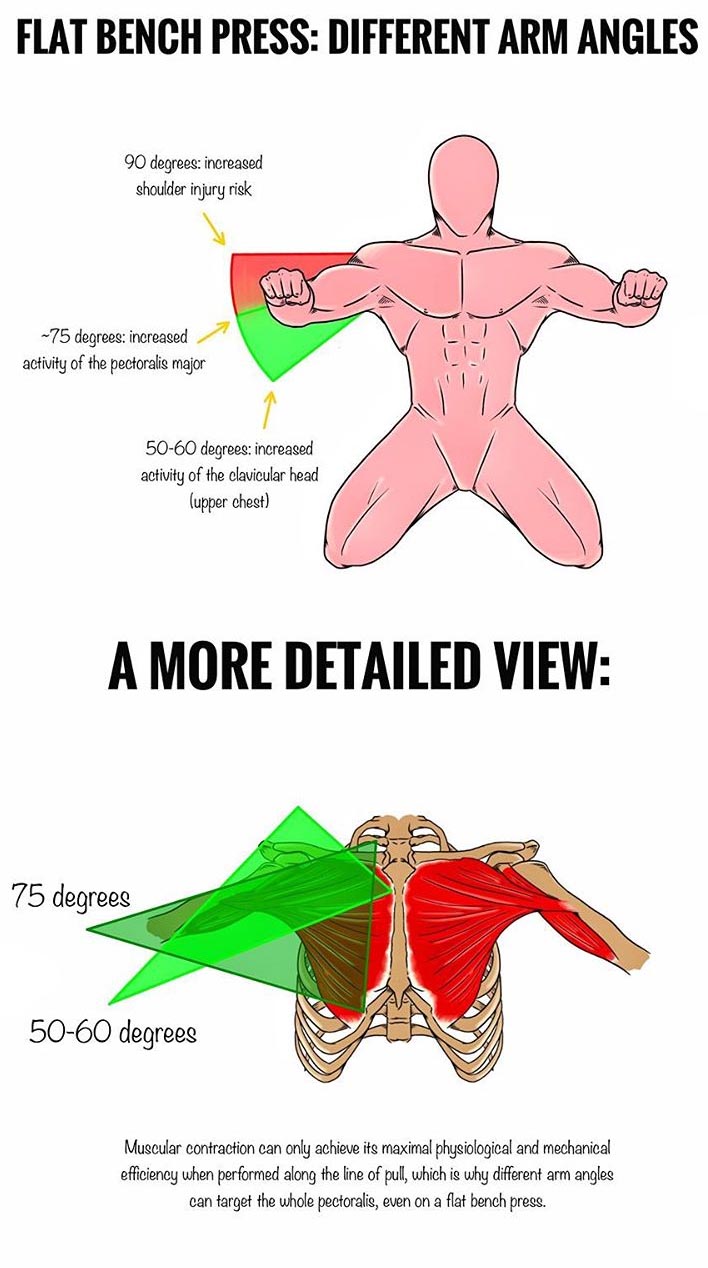
While the flat bench press works the whole pectoralis major, let’s see how different arm angles can have their purposes when trying to work on increasing the activity of its regions.
[wp_ad_camp_2]
❌❌❌A 90 degree angle puts a lot of stress on the shoulders, and when the load goes up, that’s when people typically experience shoulder issues related to the bench press, (although that might not be the only factor contributing to it).

[wp_ad_camp_1]
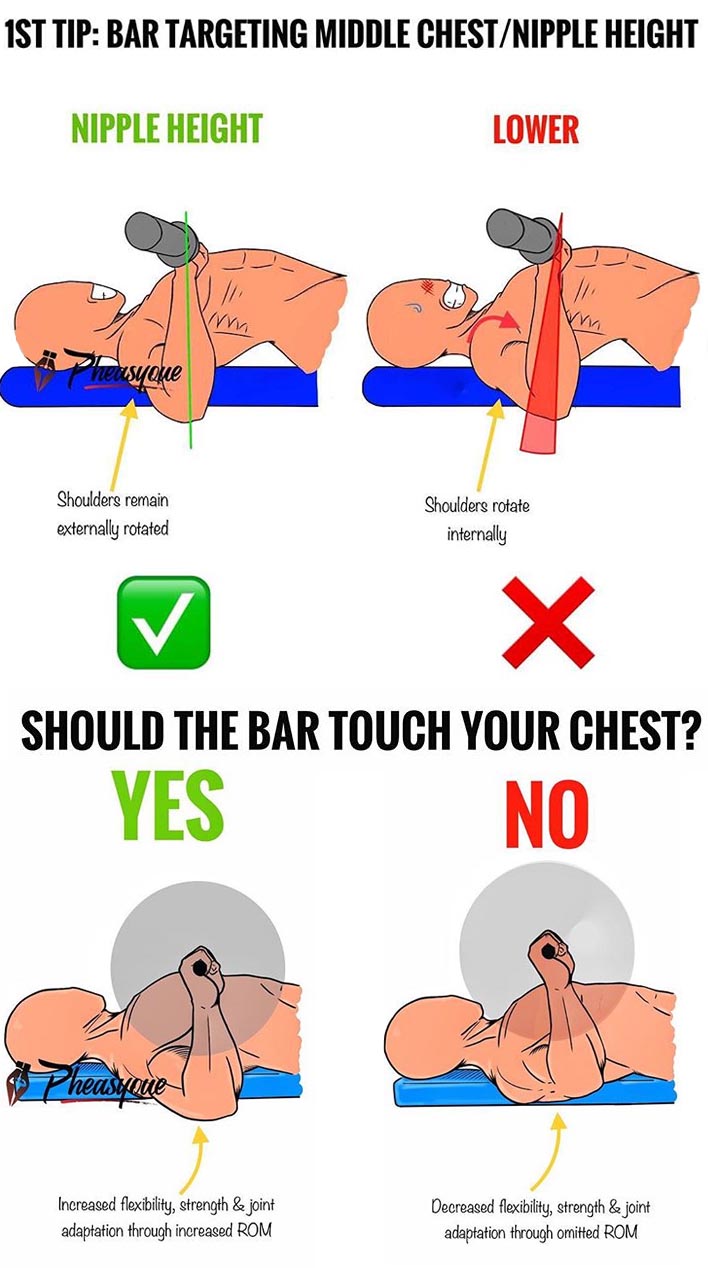
✅✅✅A 75 degree angle is typically the “classic” suggestion everyone gives (hopefully) to get the most out of the bench press while keeping shoulders safe.
But what if we want to work our “upper chest” more if we don’t have an incline bench?
We can do that as well.
While with a 45 degrees inclined bench press studies show that the upper chest gets involved the most, we can do the same by simply changing the “arm angle” and grip width of a flat bench, and creating the conditions we need to isolate that area.


[wp_ad_camp_4]
From Paoli’s book, it was demonstrated that the EMG activity of the clavicular head during horizontal flexion is more notable at a 60 degrees of humeral abduction rather than a smaller/higher degree of arm angle (30-90 degrees). This makes sense, because at this degree of angle also follow the line of pull (which is the direction of force exerted by a muscle, depending on the orientation of its fibers, its skeletal attachments, the disposition of its tendons, and the axis of movement of any joints affected).
And a muscular contraction can only achieve its maximal physiological and mechanical efficiency when performed along the line of pull.
[wp_ad_camp_3]
This was then also reinforced by Lehman’s study on a supinated grip bench press, which shows an increased upper chest engagement in contrast to a normal grip (the supinated grip bench press implies a bigger humeral adduction).