


































**Источник: fitnessvolt.com**
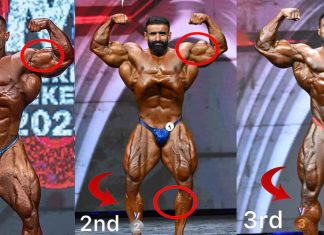
The standards of professional bodybuilding are constantly evolving, but not all changes are viewed as progress by the sport’s legendary figures. Recently, renowned trainer and retired IFBB Pro Dennis James voiced strong criticisms regarding the current state of conditioning in the Men’s Open division. James, who competed during the highly competitive ’90s and 2000s era’, argues that today’s competitors are failing to achieve the ultra-shredded, paper-thin skin look that defined his generation. His critique sparks a vital debate within the fitness community about modern preparation methods, work ethic, and the evolution of judging criteria.
The Lost Art of Extreme Conditioning
In bodybuilding, conditioning refers to the extreme reduction of body fat and subcutaneous water, allowing every muscle fiber, striation, and vein to be visible. Dennis James emphasizes that the level of conditioning seen on stage today often looks ‘soft’ compared to the past. ‘I don’t see the suffering that we used to,’ James remarked, referring to the grueling diet, relentless cardio, and psychological grit required to achieve peak conditioning. In his view, modern athletes are relying too heavily on chemicals and shortcut protocols rather than putting in the hard, uncomfortable work in the gym and kitchen. This reliance on quick fixes over disciplined struggle has created a noticeable deficit in on-stage sharpness.

Why Modern Bodybuilding Has Shifted Its Focus
To understand James’s critique, one must analyze the shifting priorities of modern judging and athlete preparation. Today’s Men’s Open division highly rewards extreme muscle mass and ‘bubble’ aesthetics, sometimes at the expense of razor-sharp conditioning. Additionally, the science of prep has evolved; coaches today often prioritize athlete health and longevity, attempting to bring competitors to the stage without the severe dehydration and extreme starvation of the past. However, critics like James argue that this safety-first approach, while healthy, has diluted the visual impact of the sport, resulting in athletes who look impressive but lack the legendary ‘grainy’ texture of past champions. The balance between mass and definition has tilted too far towards mass.
The Role of Hard Work and Mental Toughness
Dennis James’s comments also touch upon a generational divide in mental attitude and work ethic. The era of Dorian Yates, Ronnie Coleman, and Dennis James himself was characterized by ‘blood and guts’ training—a brutal, no-nonsense style where suffering was worn like a badge of honor. James believes that some modern competitors lack this psychological resilience, seeking comfortable paths to an uncomfortable look. Achieving true elite conditioning requires pushing past normal human limits of fatigue and hunger, a state that cannot be replicated by pharmacological means alone. The psychological battle is just as important as the physical one.

Looking to the Future of the Men’s Open Division
James’s critique serves as a wake-up call for current and aspiring bodybuilders. As fans and judges increasingly clamor for a return to aesthetic harmony and conditioning, athletes may need to recalibrate their prep strategies. Striking a balance between massive size, extreme conditioning, and athlete safety remains the ultimate challenge of modern bodybuilding. Whether the current generation will heed James’s advice and embrace the ‘suffering’ required to achieve historical conditioning levels remains to be seen, but the debate he has reignited is essential for the future of the sport, raising the standard for everyone involved.